
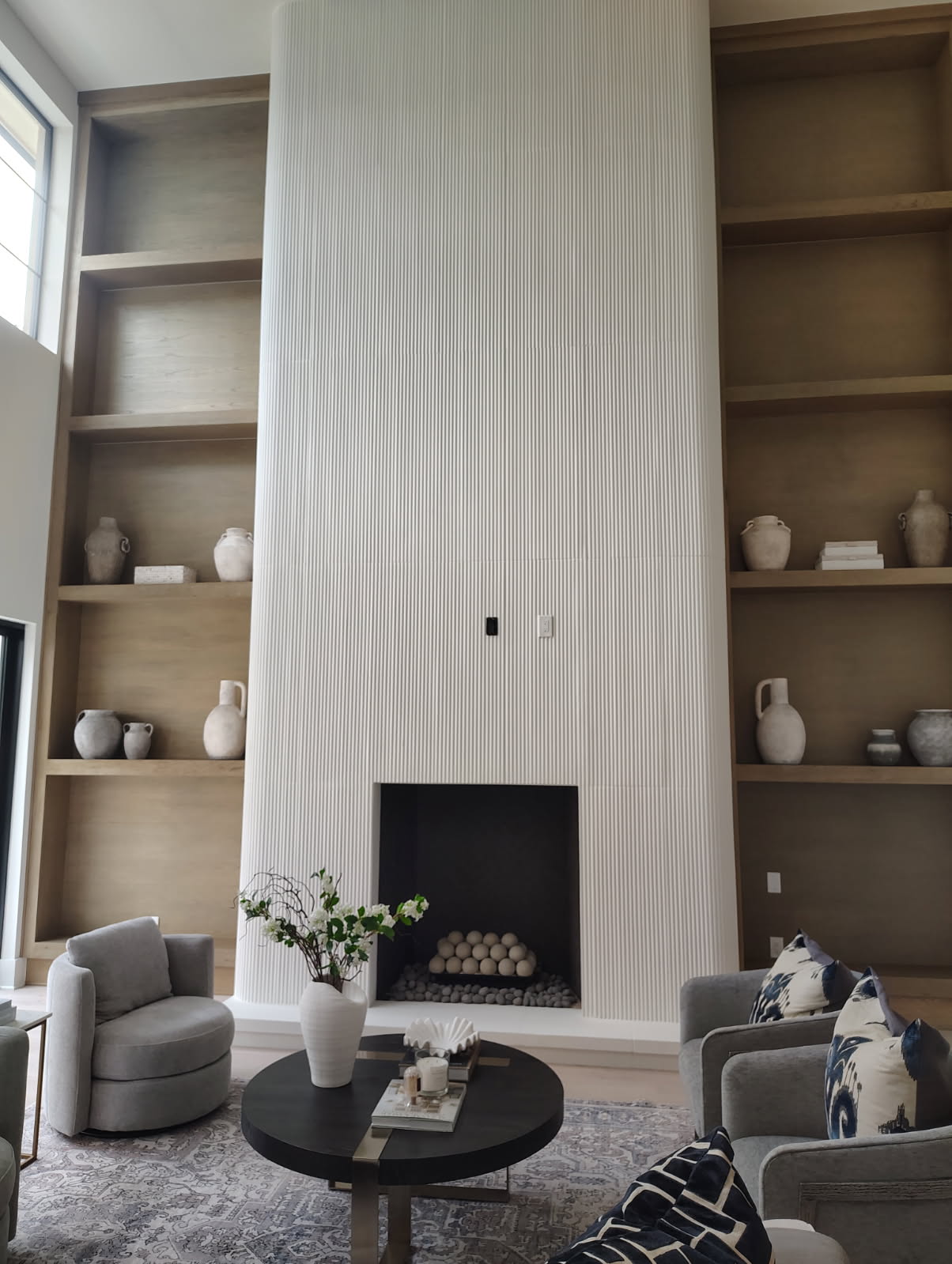
Before the First Cold Night: What to Check on a Fireplace You Have Not Used Since Spring
Eight months of Houston heat, storms and humidity work on a fireplace whether you use it or not. Here is what to look at before the first fire of the season.
A fireplace that has sat unused since spring is not in the same condition you left it in. Houston's long hot season, its storms and its humidity work on the firebox, the damper and the chimney the whole time the fireplace is dark, and the first cold night of October is when whatever changed announces itself.
The good news is that most of what goes wrong over a Houston off-season is visible or findable before you ever strike a match. Here is the walkthrough we give homeowners from Katy to Conroe every fall.
Start inside, at the firebox
Open the damper and look up with a flashlight. You are looking for three things. First, daylight or debris where there should be neither: leaves, twigs or a nest mean the flue is blocked and smoke has nowhere to go. Second, the firebrick and mortar joints of the firebox itself. Firebrick is made to take heat, but mortar joints recede and brick faces flake over time, and gaps in the firebox are gaps between the fire and the structure of the house. Third, rust. Surface rust on the damper is normal. Heavy rust, or a damper that will not open and close smoothly, usually means water has been getting in from above, and that points to the top of the chimney.
If you have a gas fireplace or gas logs, the off-season check is different but just as real. Dust and spider webs collect in burner ports and around the pilot assembly over months of disuse, and a burner that lights unevenly or a pilot that will not stay lit after a long idle season is usually a cleaning issue, not a broken appliance. What you should not do is keep relighting it and hoping. A gas appliance that misbehaves gets looked at, not negotiated with.
The damper test everyone skips
Open and close the damper fully, twice. It should move through its whole range and stay where you put it. A damper stuck partway is a smoke-in-the-room problem on the first fire. While it is open, do the tissue test: hold a lit match or a strip of tissue near the opening and watch the draw. Air should pull up the flue. If it pushes back down into the room, the flue is blocked or the house is under negative pressure, and either way the fire waits until that is sorted.
Then look at the top of the chimney
You can do most of this from the ground with binoculars. The cap should be sitting square and intact; a missing or crooked cap is an open door for rain and animals. The crown, the concrete slab the cap sits on, should be free of cracks. Cracked crowns are the single most common thing we find on Houston chimneys, because our weather opens them up and every storm after that feeds water into the masonry below. On a factory-built chimney with a metal chase cover, look for rust stains running down the siding. That stain is the cover telling you it has failed.
Also look at the flashing where the chimney meets the roof. Lifted or separated flashing is a leak that shows up as a ceiling stain in the living room, and homeowners routinely mistake it for a roof problem.
What the camera sees that you cannot
Everything above is what a homeowner can check. What a homeowner cannot check is the inside of the flue, and that is where the season's real surprises live. Creosote from last year's fires is still sitting in there. Liner tiles shift and crack with heat cycles and settling. A chimney inspection with a camera runs the full length of the flue and shows you, in pictures, exactly what state the system is in before you commit a fire to it.
Smells worth paying attention to
A fireplace that smells musty or smoky on humid summer days is telling you something. Creosote odor gets stronger in humidity, and a persistent smell usually means buildup in the flue, a damper that is not sealing, or water sitting somewhere it should not. None of those fix themselves over the season.
Gas fireplaces need the same seasonal respect
Because a gas fireplace lights with a switch, owners assume it needs nothing. The off-season says otherwise. Burner ports collect dust and lint, the glass panel fogs with a film that bakes on if you ignore it, and the pilot assembly is a favorite nesting spot for exactly the kind of spider that causes a no-light on the first cold night. An annual service before the season, a cleaning, a check of the ignition and a look at the vent termination outside, is what keeps the switch working like a switch.
When to make the call
If the walkthrough turns up a stuck damper, visible gaps in the firebox, a crooked cap, a stained chase cover or a smell you cannot place, that is the moment for a site visit, not the first cold night. Once the first front rolls through Houston, everyone lights a fire on the same evening and every fireplace repair schedule in town fills at once. The homeowners who checked in early October are the ones enjoying the fire while everyone else is waiting for a callback.
One last thing that costs nothing: test the smoke and carbon monoxide detectors on the fireplace floor before the season. The fireplace gets the attention, but the detectors are the backstop, and they only work if someone presses the button.
Annual chimney sweeping, creosote removal, and Level 1, 2 and 3 inspections before burning season.
See the serviceGas and wood-burning fireplace repair — pilot lights, valves, thermocouples, gas logs, cracked fireboxes, dampers, and smoke problems.
See the serviceFirst fire coming up?
Call Artex at (281) 570-9408 for a pre-season inspection anywhere in the Houston area. Building in Houston since 1992.