
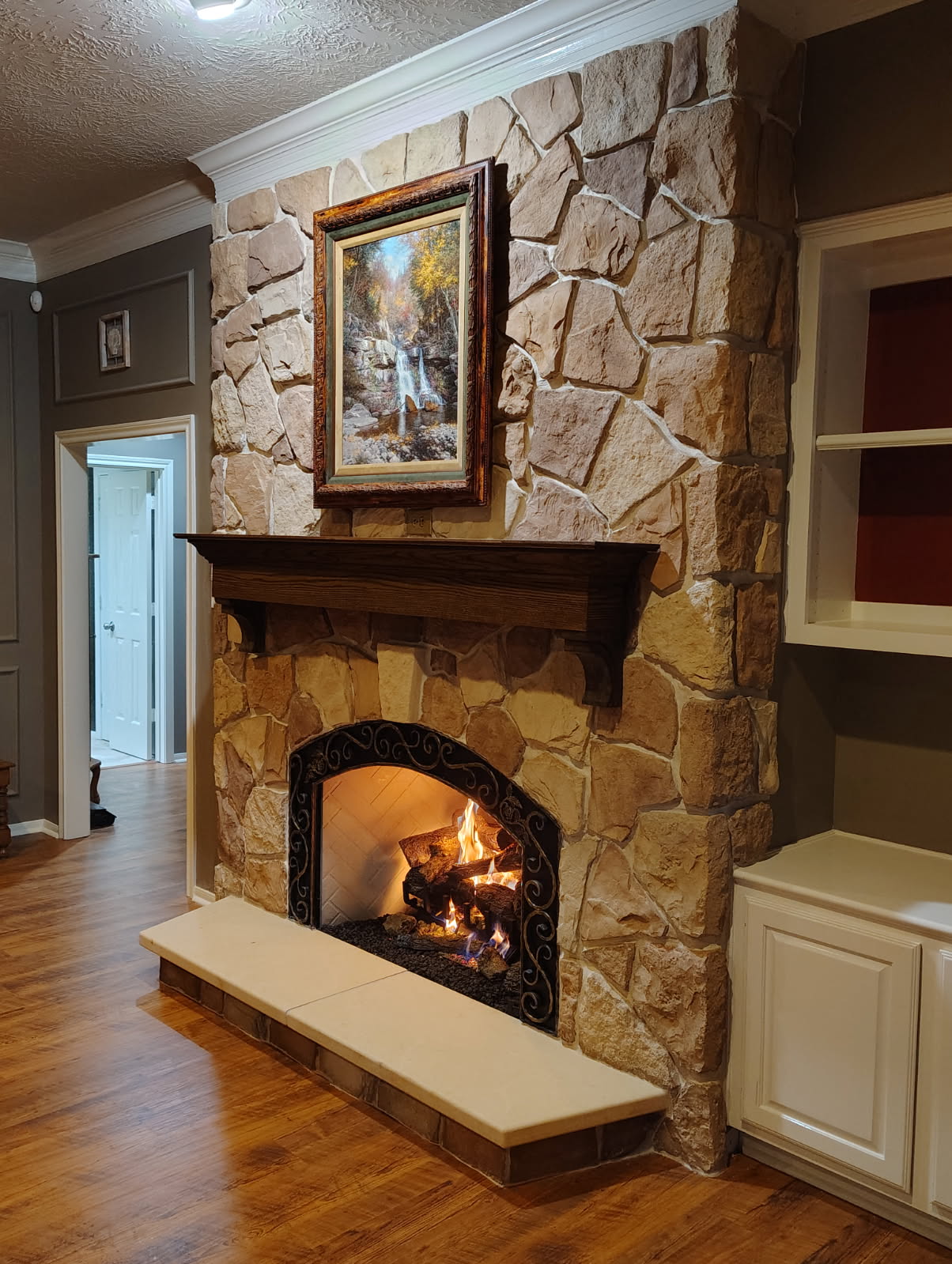
Gas or Wood Burning Fireplace for a Houston Home
One of them is the fire you imagined. The other is the fire you will actually have. The right answer depends on how your household really behaves.
This is the first real decision on any fireplace project, and most people make it with their heart instead of their calendar. The wood fire is the one in the picture in your head. The gas fire is the one that will be on. Both are good builds. They are just different appliances wearing the same stone.
We build both, and we have been building in Houston since 1992. Here is the honest trade.
What each one actually is
A wood-burning fireplace is a masonry structure: a hand-laid firebox, a shaped throat and smoke chamber, and a full-height flue terminating above the roofline. It is the heavier build, and it is also a permanent piece of the house, real masonry that outlives everything around it.
A gas fireplace is a sealed appliance. A factory-built unit with a direct vent, a coaxial pipe that brings combustion air in and sends exhaust out through the wall or roof, fed by a gas line. The flame burns behind glass, controlled by a switch or a remote.
What each demands from the house
Wood demands structure. It needs a real firebox and a real flue, which means footing-to-cap masonry if you are building new, or a sound existing chimney if you are not. It needs clearances to anything combustible, and it needs the flue to draw, which is a height and termination question.
Gas demands a route. The gas line has to get from the meter to the unit, past whatever the furnace, range and water heater already take, and the vent has to get out of the house within the run limits the manufacturer sets. Neither is exotic, but both are decided by your floor plan, which is why a walkthrough matters more than a showroom visit.
The Tuesday night test
This is the part nobody wants to say out loud. A wood fire is an event: wood to buy and store, a fire to build, an hour to enjoy, a box of ash to clean out later. Some households love exactly that. Most households, by the second season, do it a handful of times a year.
A gas fire is a switch. On a Tuesday, for an hour, because the room feels cold and it looks nice. The fireplace that turns on is the one that gets used, and in a mild Houston winter, where the season is short and the cold is rarely serious, convenience wins more often than romance expects it to.
Heat, cleaning and resale
On heat: wood in an open fireplace sends most of its heat up the flue; it is atmosphere first, warmth second. A sealed gas unit returns more of its heat to the room, which in Houston is usually more heat than you wanted anyway. On cleaning: wood means ash, soot and annual creosote management; gas means a glass panel and an annual check. On resale: buyers here respond to a fireplace that works and looks finished. Both deliver that when the build is right. A neglected wood fireplace does the opposite.
Frequently asked questions
Can I convert my wood fireplace to gas? Usually, yes. A gas insert or gas log set into an existing, sound masonry firebox is one of the most common jobs we do. The chimney gets inspected first, and anything the camera finds gets corrected before the appliance goes in.
Is ventless gas an option? Vent-free units exist, but we steer most households to vented. A sealed direct-vent unit keeps combustion air and exhaust outside the room entirely, which is the arrangement we are comfortable putting our name on.
Which adds more value? A finished, working fireplace of either type. What hurts value is a fireplace that looks tired or is known not to work. Build the one you will use, and build it right.
How we help you decide
The right answer sits in your house, not in an article. We walk the room, look at the meter and the vent route, ask how your household actually spends a cold evening, and tell you which one suits you, even when the honest answer is the smaller job.
Gas or wood?
Call Artex at (281) 570-9408 and we will walk the room, the vent route and the gas meter and tell you straight which suits the house. Building in Houston since 1992.