
Installing a gas fireplace in Houston: vented vs ventless, permits, cost and timeline
What actually happens when a gas fireplace goes into a Houston home — the vented and ventless decision, gas line and venting work, permitting, and how long the job takes.
A gas fireplace is the most common thing we install in Houston, and it is also the project homeowners have the least accurate picture of before they call. People imagine an appliance being slid into an opening. What is actually happening is a combination of gas work, venting, framing, finish masonry and, in most jurisdictions here, a permit and an inspection.
The first decision is the appliance category, and it drives everything downstream. A direct-vent gas fireplace is a sealed unit: combustion air comes in through the outer pipe of a coaxial vent and exhaust leaves through the inner one, so no house air is consumed and no combustion products enter the room. It is the safest and by far the most common choice for new installations, and it is what we recommend in almost every tightly built Houston home.
A B-vent (natural vent) unit draws combustion air from inside the room and exhausts vertically through a flue. It is cheaper and it is what many older Houston homes already have, but it depends on the flue drafting correctly, which is exactly the thing that fails in a house with modern insulation and strong bathroom and kitchen exhaust fans.
Ventless — more accurately vent-free — units burn without any flue at all and rely on an oxygen depletion sensor to shut the unit down. They are legal in Texas and they do produce heat efficiently, because nothing goes up a chimney. The trade-off is real: every byproduct of combustion, including a significant volume of water vapor, ends up in the room. In a humid Gulf Coast house that already fights moisture, that matters. Vent-free units also carry room-size and bedroom restrictions and are not permitted in some local codes and HOAs. We install them when a customer asks for one and the location allows it, but we tell everybody the same thing: if a vent run is achievable, vent it.
The second decision is where the vent goes. Direct-vent units can terminate through an exterior wall horizontally or run vertically through the roof. Horizontal is faster and cheaper; the constraint is clearance — the termination has to sit a set distance from windows, doors, soffits, gas meters and property lines. On zero-lot-line homes in Cypress and inside the Loop, that clearance requirement is frequently what dictates which wall the fireplace ends up on. A vertical run gives more freedom in placement but adds pipe, roof penetration and flashing.
Third is gas supply. An existing gas log lateral is often undersized for a modern insert running at full input, especially where the run is long or already feeding a range and a water heater. Part of a proper quote is confirming line size and pressure at the appliance, not assuming the stub in the firebox is adequate. Where the line needs upsizing or extending, that is real plumbing work and it belongs in the written quote before the job starts, not as a change order on day two.
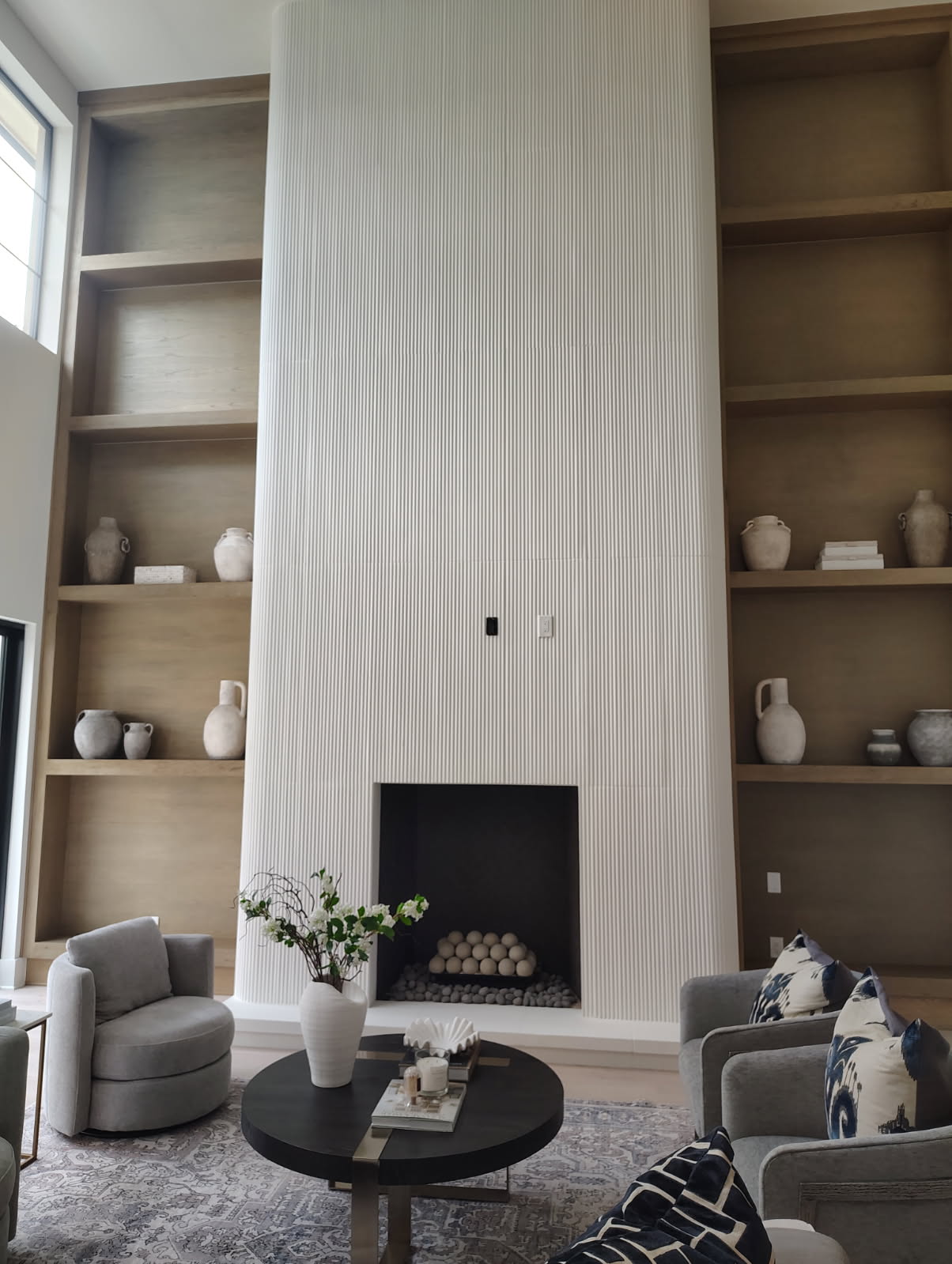
Fourth is the enclosure. A fireplace insert going into an existing masonry firebox is comparatively simple. A new fireplace on a wall that never had one requires framing a chase, sheathing it, running the vent, and then finishing the face — stone, brick, tile, plaster or a mantel wall. That finish work is usually the largest single portion of the schedule and the budget.
On permits: gas appliance installation and gas piping work in the City of Houston require a permit and inspection, and the surrounding jurisdictions — Harris County, Katy, Sugar Land, Tomball, The Woodlands and the rest — each have their own process. We handle permitting as part of the job. Skipping it is not a shortcut; it is the thing that surfaces at resale, during an insurance claim, or when the next owner's inspector opens the panel.
On timeline, the honest answer is that it depends on scope and we will put the specific schedule in your quote. A straightforward insert into an existing firebox with a serviceable gas line is a different job from framing a new chase on an exterior wall and cladding it floor to ceiling. What we will not do is give you a number over the phone before anyone has looked at the wall, the attic and the gas line, because that number is always wrong in one direction or the other.
On cost, the same applies. We give a written quote up front with the appliance, venting materials, gas work, framing, finish material and permit fees itemized, so you can see what is driving the price and where the options actually are. Anyone quoting a gas fireplace installation sight-unseen is quoting the appliance and hoping the rest fits.
What a complete quote should include: the specific make and model of the appliance and its input rating, the vent configuration and termination location, any gas line modification, framing and enclosure work, the finish material and its installed square footage, the permit, and the final commissioning — leak test, burner adjustment, flame appearance, and a walk-through of the remote or wall control with you.
A few things worth knowing before you choose an appliance. Heat output is not the whole story in Houston; a 40,000 BTU unit in a small living room is unpleasant most of the year, and many customers are happier with a smaller linear unit or one with a blower they can leave off. Log sets and interior finishes are usually locked at the time of order and are painful to change later. And if you want a wall switch or smart control rather than a remote, say so up front — the wiring is trivial during framing and invasive afterward.
If your existing masonry fireplace is sound and you simply want to stop hauling wood, a gas insert or log set is the shorter path. If the firebox is cracked, the flue is compromised, or you want a different location entirely, you are looking at a full installation. Either way, the walk-through starts the same: look at the firebox, look at the flue, look at the gas line, and look at where the vent can legally terminate.
See our fireplace installation service page for the full scope of what we install, or the gas log installation page if you are converting an existing wood-burning firebox.
Thinking about a fireplace?
Custom fireplace installation, chimney repair and masonry across greater Houston — free written estimates and three decades of craftsmanship.