Gas, Wood or Electric: What Each One Asks of Your House
The fireplace you want and the fireplace your house can easily host are sometimes different things. Here is what each fuel actually requires.
Choosing between gas, wood and electric is less about the flame you prefer and more about what your house can give each one. Every fuel type arrives with a list of demands, and the right choice is the one whose demands your house already half-meets.
Here is the honest accounting we walk through with homeowners across the Houston area, from Katy to Conroe, before any design conversation starts.
Wood: the one that asks for the most
A wood-burning fireplace is a masonry structure, and it asks for structure in return. It needs a real firebox built to take direct flame, a shaped throat and smoke chamber, and a full-height flue that terminates above the roofline at a height that lets it draw. It needs clearances from everything combustible in the framing around it. And it needs support: a masonry fireplace is heavy, and the footing or slab under it has to be designed for the load.
In return it gives you the thing no other fuel fully replicates: a real wood fire, with the sound, the smell and the particular quality of heat that comes with it. In an existing house without a chimney, building all of that new is a real project. In new construction it is straightforward, because everything gets designed in from the start. And in a house that already has a sound masonry chimney, it is often the easiest path of all, because the expensive part already exists.
Wood also asks something of you after installation: wood to buy and store, ash to clean, and a chimney that gets inspected and swept on a schedule. Households that want the ritual love this. Households that do not should be honest with themselves before the footing is poured.
Gas: the one that asks for a route
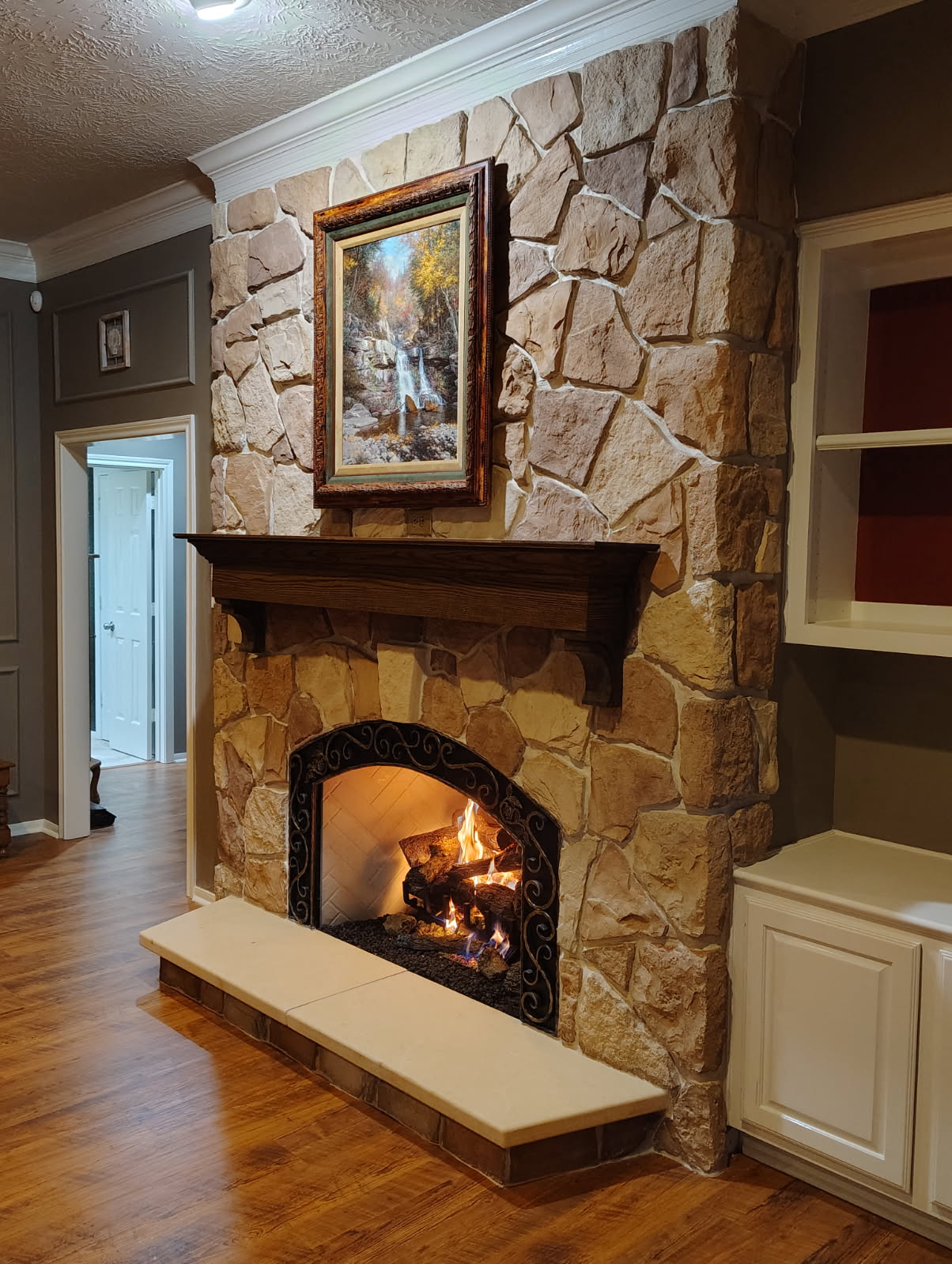
A gas fireplace asks for two routes: a gas line from the meter to the unit, and a vent from the unit to outside. The gas line question is about capacity and path: what the furnace, water heater and range already draw, and how the line gets through the house to the fireplace wall. The vent question depends on the unit. A direct-vent fireplace uses a sealed coaxial pipe that can go out a wall or up through the roof within the manufacturer's run limits, which makes it workable in most rooms. A gas insert into an existing masonry fireplace vents up the existing chimney with a liner, which is one of the cleanest conversions there is, provided the chimney is sound.
What gas gives back is the Tuesday-night fire: a switch or a remote, instant flame, no wood, no ash, and heat that actually stays in the room. In a mild Houston winter, where the season is short and the cold is rarely serious, that convenience is why gas is the most-installed fuel we put in. The fireplace that turns on is the one that gets used.
Electric: the one that asks for almost nothing
An electric fireplace asks for a wall and a circuit. No vent, no gas line, no flue, no clearances to speak of beyond the manufacturer's own specifications. That is why electric goes places the other two cannot: interior walls, apartments of the design world, media walls, bedrooms, anywhere running a vent or a gas line would be disproportionate.
What it gives back is the look and a modest amount of supplemental heat, not the experience. Modern electric units have genuinely good flame effects, and in a media wall or a linear installation the result can be striking. But it is a picture of a fire plus a space heater, and anyone who tells you otherwise is selling. For the right room and the right expectations, it is often the smartest choice on the list.
How the house usually decides
In practice the house narrows the field quickly. An existing sound masonry chimney points at wood or a gas insert. A convenient exterior wall and an accessible gas meter point at direct-vent gas. An interior media wall with no vent path points at electric. New construction points wherever you want, because everything is easy before the walls close.
The mistake is falling in love with a fuel before walking the house. The walkthrough is where the real answer lives, and it is why our fireplace installation consultations happen at your house, not in a showroom.
What each one asks of your calendar
The house is not the only thing making demands. Wood asks for your time: sourcing and stacking wood, building the fire, cleaning the ash, and keeping the chimney on an inspection schedule. Gas asks for an annual service and nothing else. Electric asks for a dusting. Be honest about which household you are, because the fireplace that matches your habits is the one still being used three winters from now, and the one that does not becomes the most expensive shelf in the house.
Frequently asked questions
Can I switch fuels later? Wood to gas is the common one and usually straightforward with an insert. Gas to wood is only possible if the masonry structure was built for wood in the first place. Electric to anything else means adding the vent or line the house never had.
Which adds the most value? A working, finished fireplace of any fuel reads well to buyers in this market. A neglected wood fireplace reads worst of all, so the honest answer is: the one you will actually maintain.
Is one safer than the others? Each is safe when installed and maintained correctly, and each has its own failure mode when it is not: creosote and liner condition for wood, combustion and venting for gas, circuit load for electric. Correct installation and an annual look are the whole answer.
Which fuel fits your house?
Call Artex at (281) 570-9408 and we will walk the house and tell you what each option would actually involve. Building in Houston since 1992.