
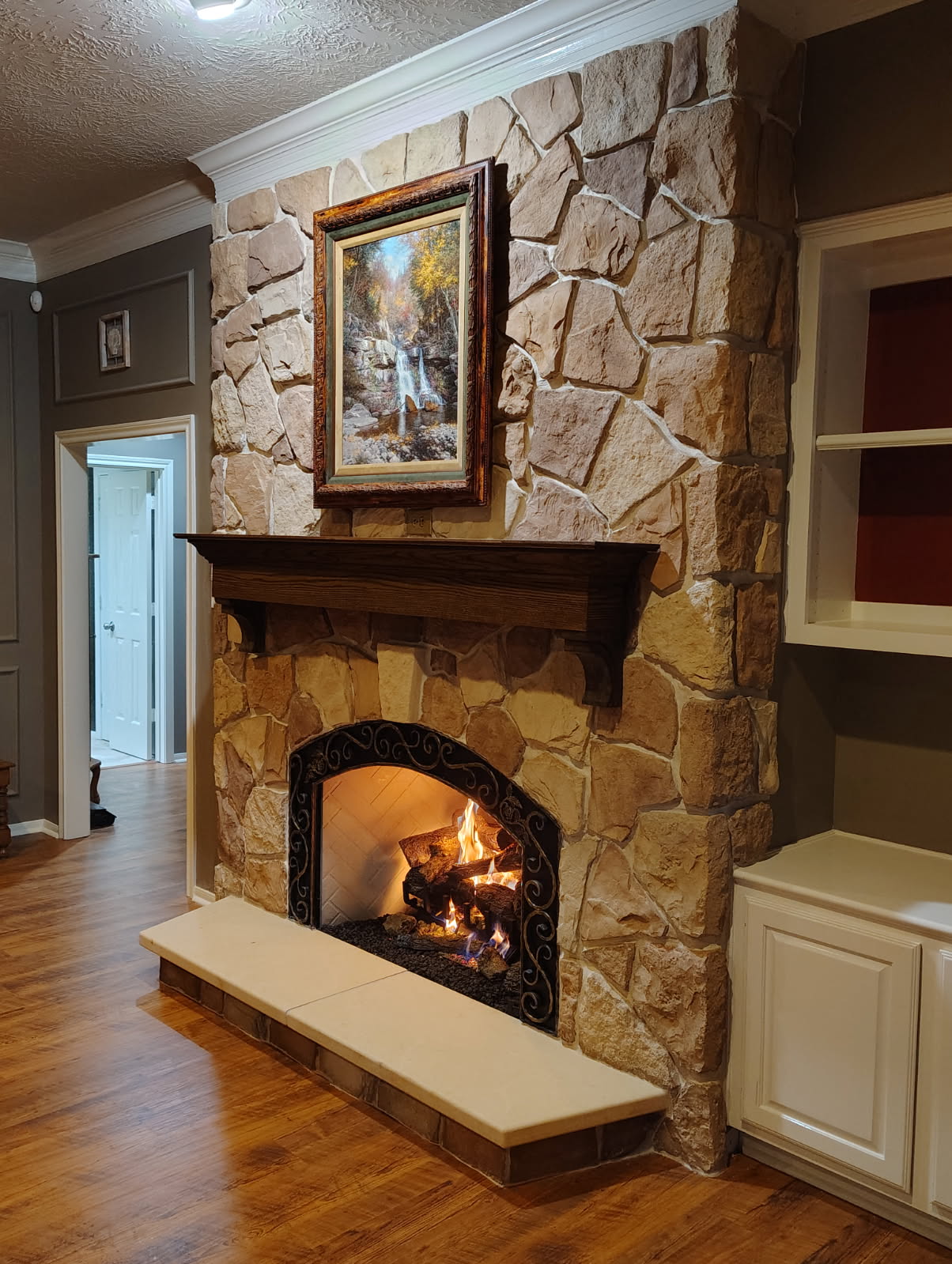
Refacing a Dated Brick Fireplace: What Actually Changes the Room
The brick is not wrong, it is just from another decade. Refacing keeps the structure you have and changes everything you see.
Refacing a dated brick fireplace means keeping the structure, the firebox and the chimney exactly where they are and changing everything your eye actually lands on: the surround, the hearth and the face of the wall. It is the single highest-impact change you can make to a living room, because the fireplace is the thing every seat in the room points at.
Most of the brick fireplaces we are asked about across Houston, Katy and the surrounding communities are not damaged. They are just dated. The brick is a color and a pattern from the decade the house was built, the hearth is an afterthought, and the whole wall reads as the one part of an otherwise updated room that never got the memo. Refacing exists for exactly that situation.
What refacing actually is
Refacing covers the existing brick face with a new material: stone, stone veneer, large-format tile, plaster or cast stone, usually with a new hearth and often a new mantel. The firebox stays. The flue stays. The structure of the chimney stays. What changes is the entire visible identity of the fireplace, and with it the room.
That is what separates refacing from a rebuild. A rebuild touches the firebox, the smoke chamber or the chimney itself, and it happens because something is structurally wrong. Refacing happens because something is visually wrong. Confusing the two is how homeowners either pay for structure they do not need or paper over structure they do. The first step of any honest refacing quote is confirming the fireplace is sound enough to deserve a new face.
Why it changes the room so much
A fireplace wall is the anchor of a living room. Furniture arranges itself around it, the TV usually lives near it, and the eye goes to it first when you walk in. Dated brick does not just look dated itself; it drags the whole room back with it, no matter what you do with paint and furniture.
Change the face and the arithmetic reverses. A floor-to-ceiling stone or plaster fireplace makes the ceiling feel taller. A clean-lined surround with a simple mantel makes a traditional room read current. The furniture and paint you already own suddenly look intentional, because the thing they are arranged around finally matches them. This is why realtors in this market consistently point sellers at the fireplace wall first: it is the one surface that re-prices the room.
The material choices, in plain terms
Stone veneer gives you the look of a full stone fireplace at a fraction of the weight, which matters because it can go over existing brick without structural changes. Natural stone is the heirloom option, heavier and more involved, and the right call when the design calls for real depth and variation. Cast stone surrounds are the formal choice: a carved-look mantel and surround in a single coordinated piece, which suits traditional and transitional rooms. Large-format tile and plaster are the modern end of the range, clean planes with minimal joints.
None of these is universally better. The right material is the one that matches the room, the architecture of the house and how formal you want the wall to feel. What we tell every homeowner is to choose from samples in the room itself, in its own light, not from a photo.
What the process looks like
A refacing project starts with the inspection, because the new face goes on a sound structure or not at all. Then comes the design: material, hearth, mantel and how the new face meets the wall, ceiling and floor. The existing brick is prepared as a substrate, the new material goes on, and the finish work, the mantel, the hearth edge, the transitions, is what separates a refacing that looks built-in from one that looks stuck-on.
The fireplace is typically out of service for the duration, which is one more reason the fall calendar matters: a refacing done in October is finished well before the nights you actually want the fire.
When refacing is the wrong answer
If the firebox is cracked, the smoke chamber is damaged or the chimney has structural problems, a new face is paint on a problem. The right sequence is repair first, face second, and any contractor who quotes the face without looking at the structure is quoting the wrong job. Our fireplace remodel and replacement work always starts with that distinction, and a good number of the dated-brick calls we get turn out to need nothing more than the new face the homeowner wanted in the first place.
The mantel and the hearth are part of the face
Homeowners often think of refacing as just the surface, but the mantel and hearth carry as much of the visual change as the material does. A heavy reclaimed-look beam makes a stone face read rustic; a slim floating shelf makes the same stone read modern. The hearth sets the base line of the whole composition, and a new hearth in a material that talks to the face is what makes the finished wall look designed rather than resurfaced. These pieces get chosen together, in the room, before anything is ordered.
Frequently asked questions
Can you reface any brick fireplace? Most, yes. The brick has to be sound and well-bonded, because it becomes the substrate the new material attaches to. Loose, spalling or painted brick sometimes needs preparation first.
Does refacing change how the fireplace works? No. The firebox, damper and flue are untouched. You get the same fire in a completely different room.
Can the hearth change too? Yes, and it usually should. A new surround over an old hearth reads half-finished. The hearth, the face and the mantel are designed as one piece.
Tired of the brick?
Call Artex at (281) 570-9408 for a refacing consultation anywhere in the Houston area. We will tell you honestly whether your fireplace is a refacing candidate or a rebuild.